
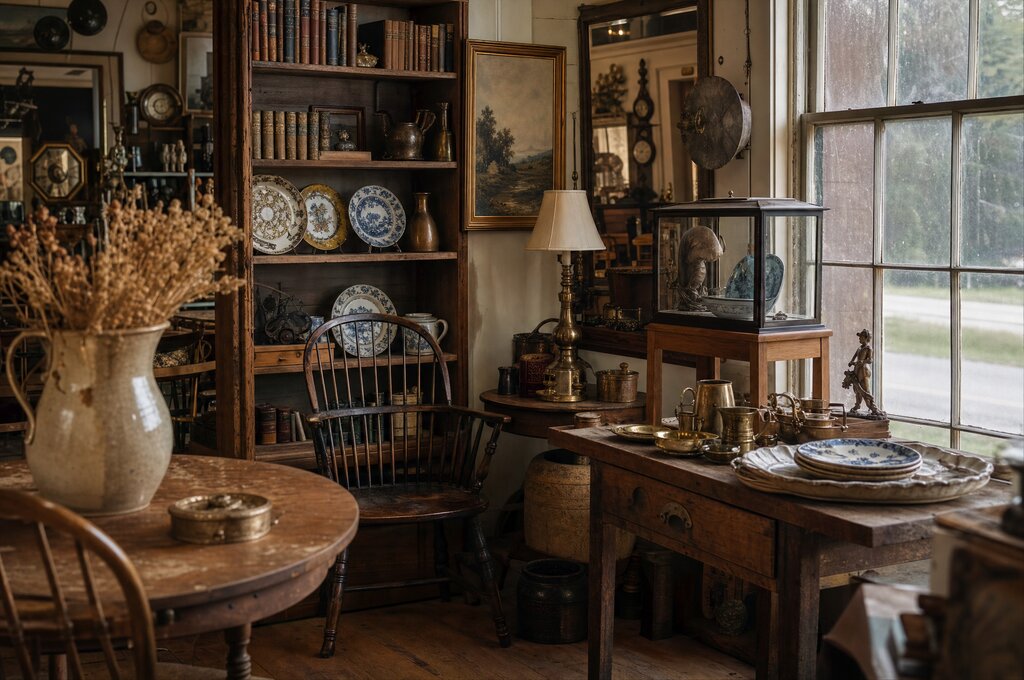
There's a stretch of Route 22 in Bedford where the road narrows, the trees lean in, and the speed limit drops to 35. If you're driving it to get somewhere, you'll barely notice. But if you slow down — if you actually look at the buildings set back from the road — you'll see a string of antique shops that together form one of the best antiquing corridors in the Hudson Valley.
These aren't the mass-market "antique malls" where everything is mass-produced vintage. These are small, owner-operated shops where the inventory is curated by people who know what they're looking at. The dealers here have been doing this for decades, and their shops reflect a lifetime of collecting. You'll find Americana, English country furniture, garden antiques, art, and the kind of quirky oddities that make antiquing fun.
We spent a Saturday driving the full corridor, stopping at every shop, and talking to every dealer who'd chat. Here's the map, the shops, and what to look for.
The Corridor: Route 22, Bedford to Armonk
The antique corridor runs roughly five miles along Route 22, from the Bedford Village area north toward Armonk. The shops are spread out — you'll need a car to do this properly — but each stop is worth the drive. Plan for a half-day, and leave room in your trunk.
Starting Point: Bedford Village
Begin in Bedford Village, where Route 22 meets Hook Road. The village itself is worth a walk — it's one of the oldest settlements in Westchester, with a green, a historical society, and the famous Bedford Oak (a 500-year-old white oak that's worth seeing in any season — check our fall foliage guide for why this area is peak autumn territory). Grab a coffee and start walking.
The Shops
Shop 1: The Country Furniture Dealer
The first shop we visited is set back from the road, behind a stone wall and a row of mature boxwoods. Inside, it's a carefully arranged collection of American country furniture — farmhouse tables, Windsor chairs, cupboards, and painted chests. The dealer has been here for over 20 years and has a reputation among collectors for finding pieces that other dealers miss.
What to look for: The painted furniture. The dealer specializes in original-paint American pieces from the 1800s — stuff that other dealers strip and refinish, but that this dealer leaves alone. The patina is the value.
Price range: Moderate to high. Pieces are investment-quality, not impulse buys.
Shop 2: The Garden Antiques Barn
A mile north, a barn-style building houses a collection focused on outdoor antiques — stone troughs, wrought iron gates, garden furniture, terra cotta pots, and architectural salvage. This is the shop that makes you want to redesign your entire yard. The inventory changes seasonally, with the best selection in spring.
What to look for: The English stone troughs. They're genuine — quarried in England and shipped across the Atlantic. They make extraordinary planters and will outlast everything else in your garden.
Price range: Moderate. Garden antiques are less expensive than furniture antiques, and the pieces here are surprisingly accessible.
Shop 3: The Eclectic Curiosity Shop
The third stop is the hardest to categorize — and that's the point. This shop is a curated jumble of the unusual: taxidermy, vintage scientific instruments, old maps, nautical antiques, and objects that defy categorization. It's the kind of shop where you walk in looking for nothing and walk out with something you didn't know you needed.
What to look for: Whatever catches your eye. The dealer is an expert at finding the unusual, and the inventory rotates frequently. If you see something you like, buy it — it may be gone next week.
Price range: Wide. Some items are under $50; others are in the thousands. Ask.
Shop 4: The Art and Framing Gallery
This shop blends antiques with art — antique frames, original paintings, prints, and period photographs. The dealer has an eye for overlooked art, and the inventory includes works by artists who were well-known regionally but never achieved national fame. It's a great place to find affordable original art.
What to look for: The frames. Antique frames are often worth more than the art they hold, and this dealer has a collection that would cost a fortune to replicate new.
Shop 5: The Multi-Dealer Cooperative
The largest shop on the corridor is a multi-dealer cooperative — a converted barn where a dozen dealers each have their own booth. This is the closest thing to an "antique mall" on the route, but the quality is higher than typical malls because the dealers are vetted. It's the best stop for browsers who want variety.
What to look for: Everything. The variety is the draw here — jewelry, books, glassware, silver, small furniture, and decorative objects. Plan to spend an hour.
Price range: Affordable to moderate. With multiple dealers, there's something at every price point.
Antiquing is the opposite of online shopping. You can't search for what you want — you have to look at what's there and decide if it's what you need. That's the pleasure of it.
Antiquing Strategy
Talk to the Dealers
This is the single most important piece of advice in this guide. The dealers along Route 22 are experts. They know the history of every piece in their shop, they know what's coming in next week, and they know what you should be looking for. Ask questions. Tell them what you're interested in. They'll point you to things you'd never have found on your own — and sometimes to other shops on the corridor.
Buy What You Love
Don't buy for investment. Buy because you want to live with the piece. The antique market is unpredictable, and the pieces that appreciate are the ones that are already expensive. The pieces that make you happy every time you walk past them — that's the return on investment that matters.
Negotiate Politely
Prices at small antique shops are often negotiable, especially for cash. But negotiate with respect — these dealers are small business owners, not flea market vendors. A polite "Is there any flexibility on this piece?" goes a lot further than a lowball offer.
Bring Measurements
If you're shopping for a specific spot — a table for a dining room, a cabinet for a wall — bring measurements. Measure the space before you leave home, including doorways and stairwells. Nothing is worse than finding the perfect piece and discovering it won't fit through your front door.
Check Hours Before You Go
The shops along Route 22 are owner-operated, which means their hours can be idiosyncratic. Some close on Mondays. Some close for vacation in January. Some are open by appointment only. Call ahead or check their websites before making the drive.
Making a Day of It
The Route 22 antique corridor is in the heart of Bedford and Armonk, which means there's plenty to do beyond shopping:
- Bedford Village: Walk the green, see the Bedford Oak, and visit the historical society.
- Rockefeller State Park: The Rockwood Hall ruins are a 15-minute drive — combine antiquing with a walk through the ruins.
- Byram Lake: Drive the Bedford Loop foliage route after shopping — the antique corridor and the scenic drive share the same roads.
- Lunch: Bedford has good dining options in the village center. Ask the dealers for recommendations — they know the best spots.
For more Westchester town guides, browse our neighborhoods page. And if you find something amazing on Route 22, let us know — we're always looking for reader recommendations.